
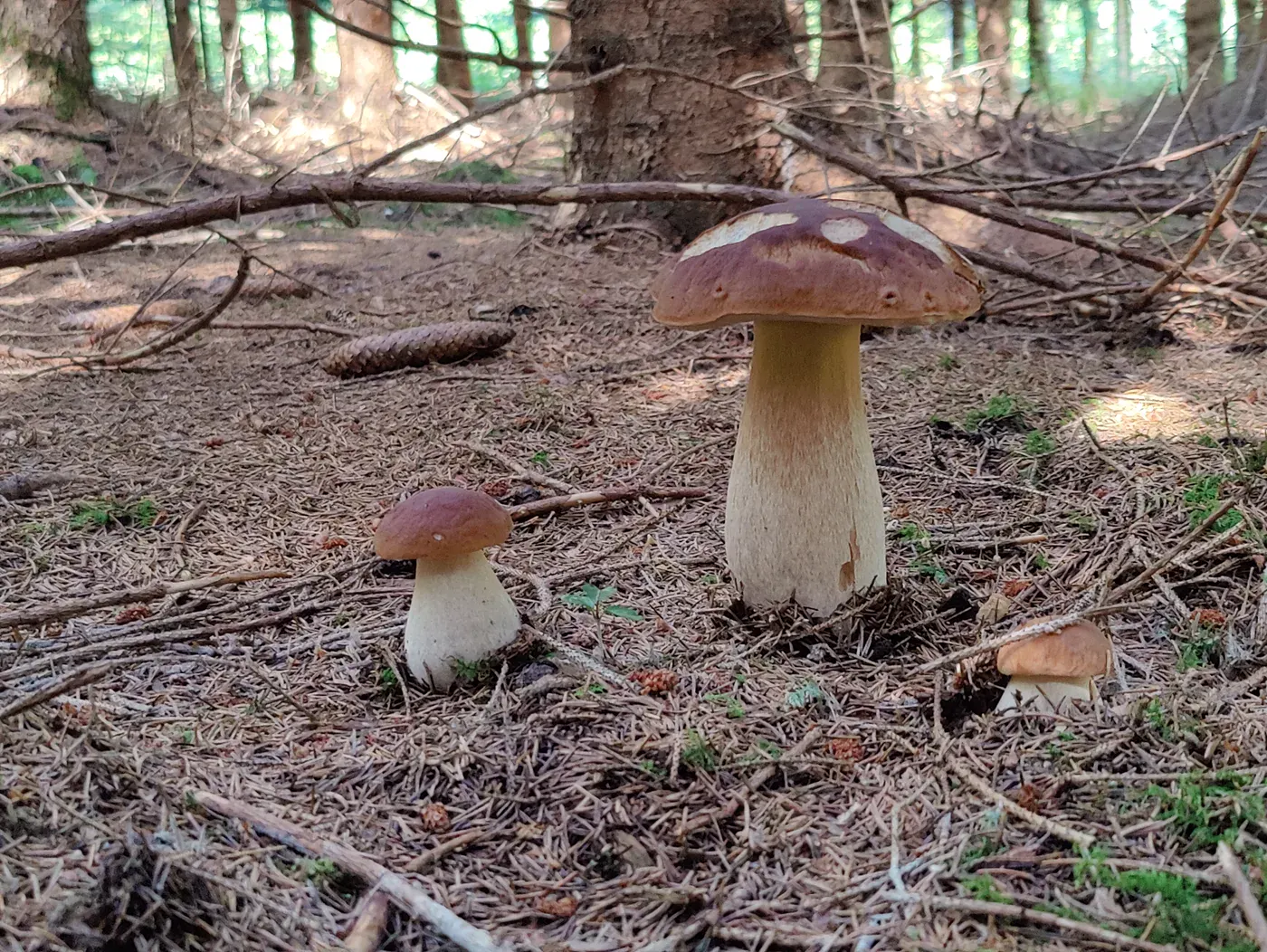
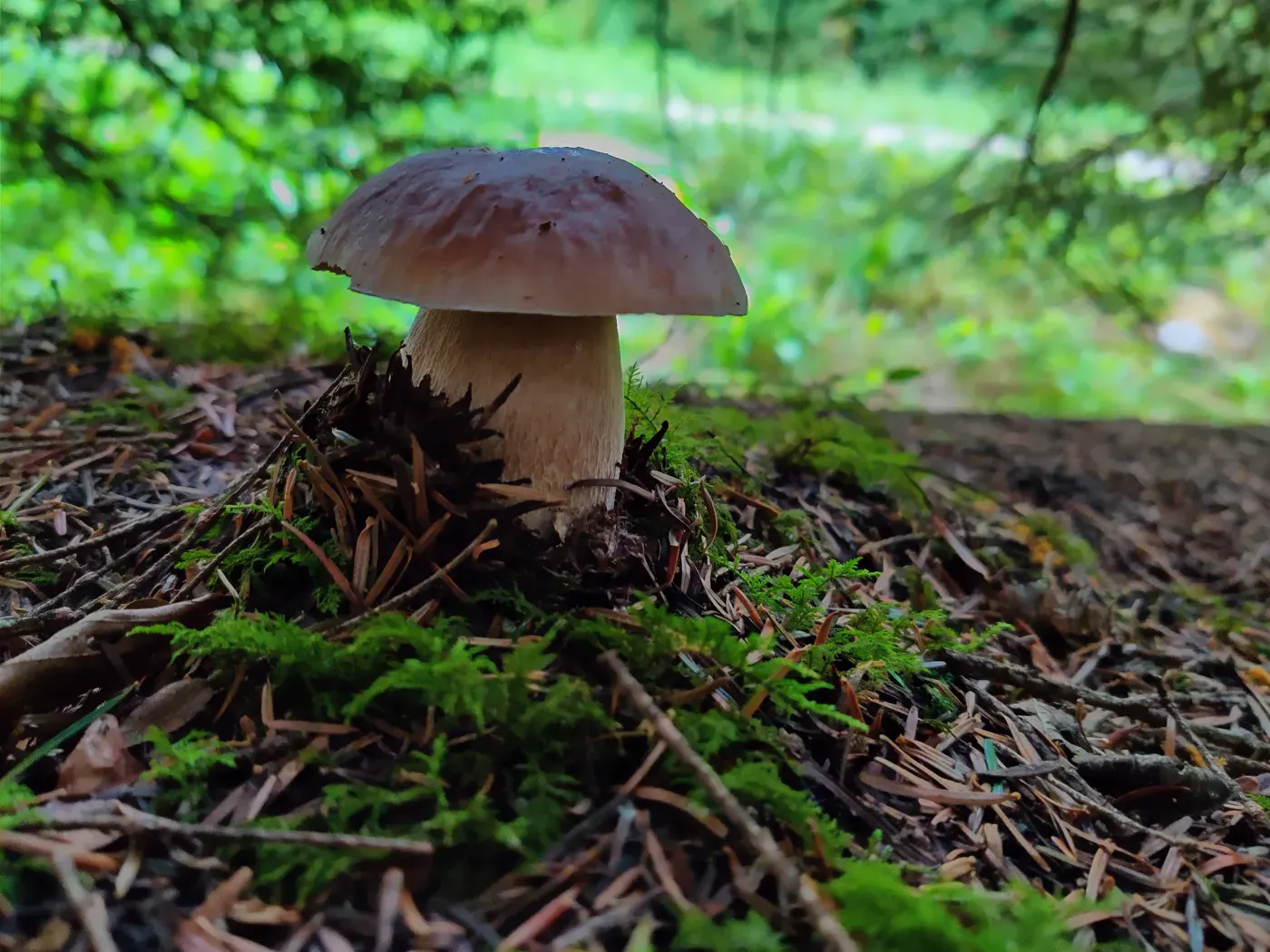
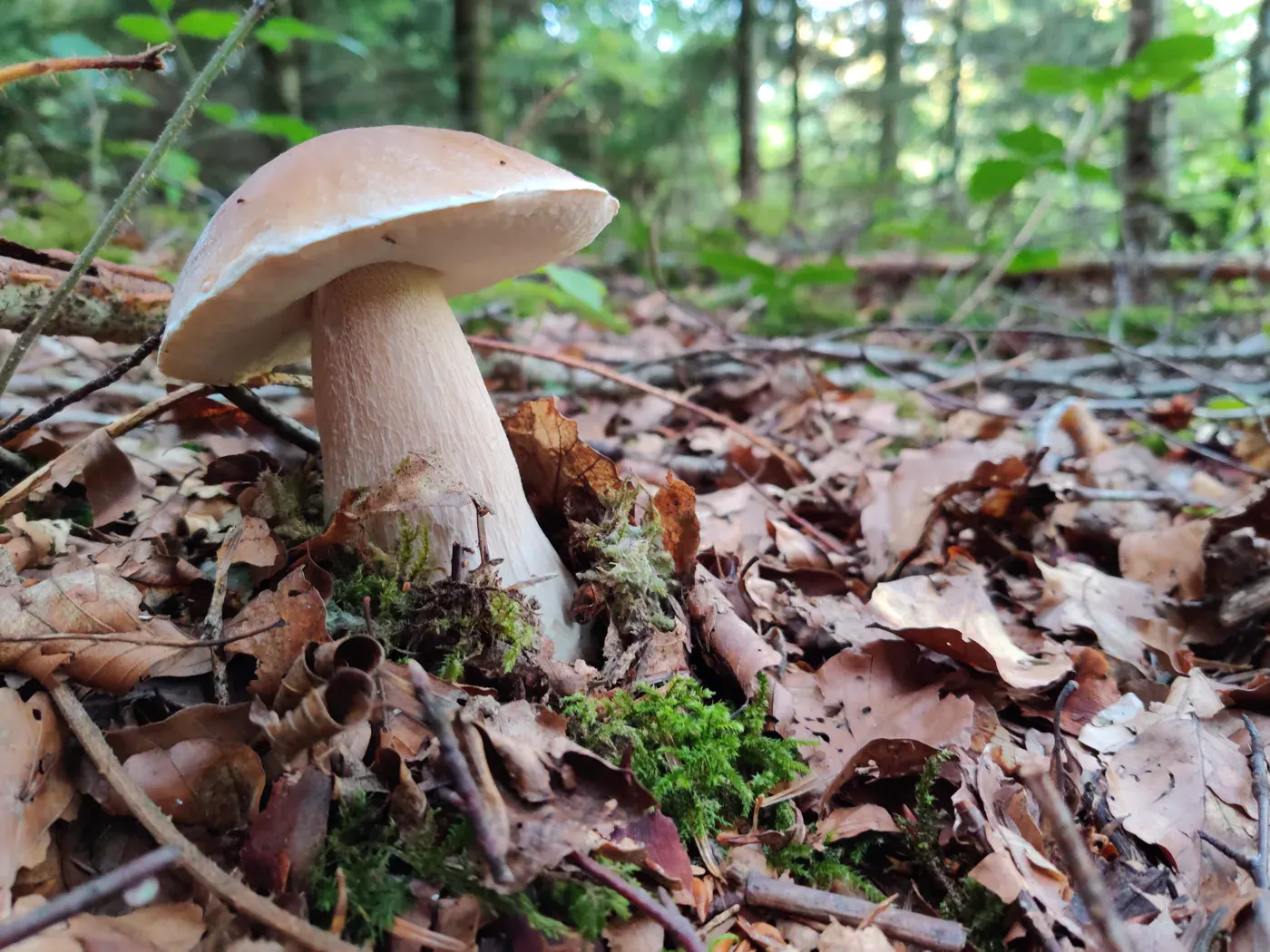
Porcini are not restricted to one forest scene. Depending on the species, they occur in broadleaf, conifer or mixed forests in association with particular trees. Suitable habitat makes an occurrence plausible but never guarantees visible fruiting.
One group, several niches
Porcini refers to several closely related boletes. Boletus edulis can associate with a range of broadleaf and conifer trees, while related species have stronger preferences. A useful map should not flatten all porcini into one ecological pattern.
Forest structure matters too
Tree identity is only one clue. Stand age, canopy openness, litter depth, drainage and water retention shape the local habitat. Two forests that look similar may therefore provide very different conditions a short distance apart.
Observe without jumping to conclusions
Record dominant trees, aspect, elevation and ground condition. These observations help explain a site, but they cannot identify a mushroom or establish edibility. Any collection intended for food should be officially inspected.
FAQ
Frequently asked questions
Do porcini grow only under Norway spruce?
No. Several porcini species form mycorrhiza with broadleaf or conifer trees. The exact relationship depends on species and site.
Is every beech forest automatically suitable?
No. Beech alone is not enough. Soil, moisture, stand history, season and weather also influence fruiting.