
Porcini form mycorrhiza with the roots of certain trees. Depending on species, partners can include spruce, fir, pine, beech, oak and sweet chestnut. Recognising the tree provides ecological context, not proof that porcini are present.
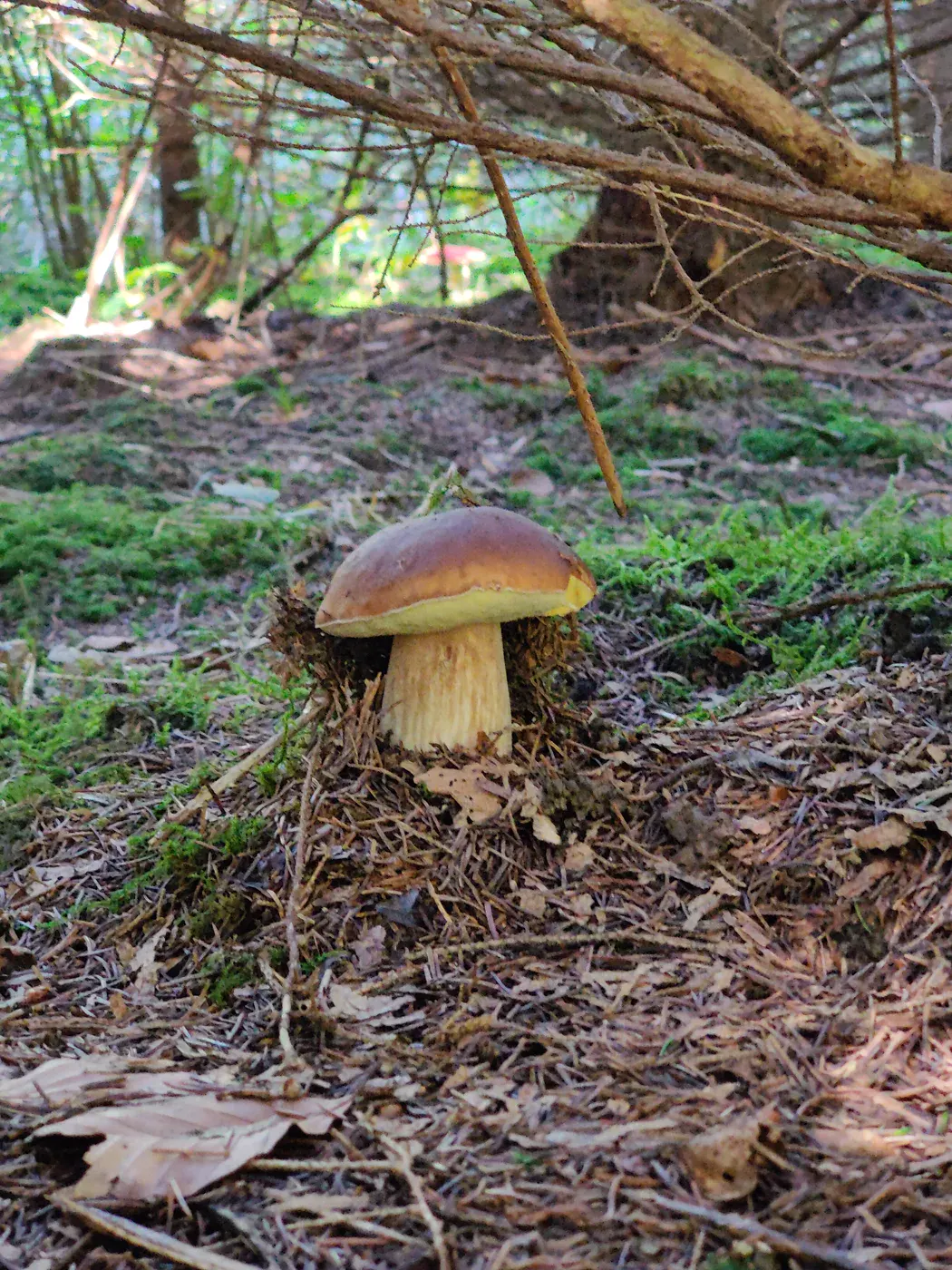
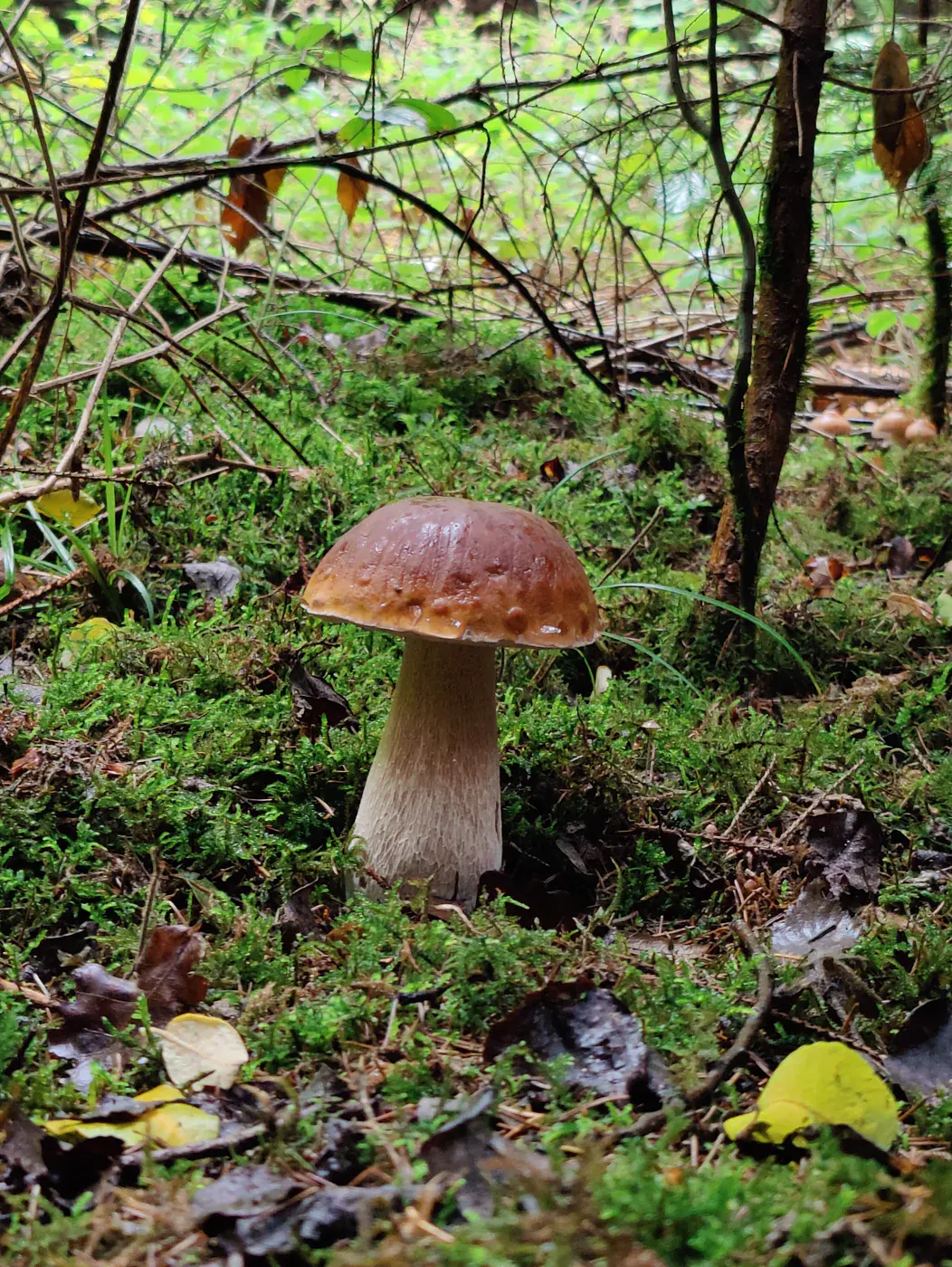
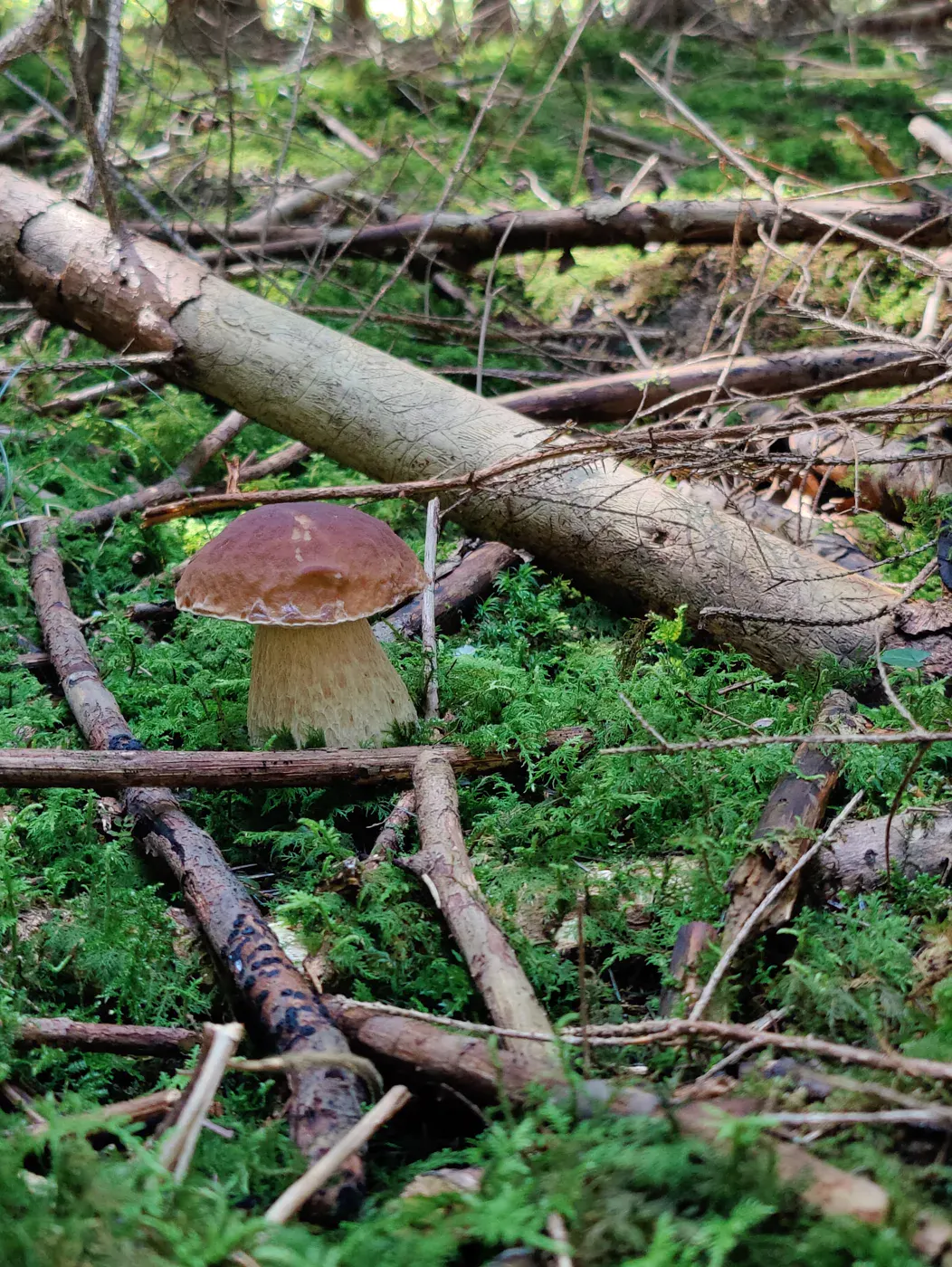
An exchange that supports both partners
In a mycorrhiza, the fungus explores soil around roots and contributes to water and nutrient exchange, while the tree supplies compounds made through photosynthesis. This relationship makes forest composition central to many boletes.
Look beyond the nearest trunk
Roots extend widely and tree species often mix. The potential partner is not necessarily the trunk beside a fruiting body. Hidden saplings, a nearby edge and the previous stand can all complicate interpretation.
Build a useful field notebook
Photograph leaves, needles, bark and fruit without using them to decide edibility. Record ground conditions, slope, elevation and date. Over time, this context is more useful than a one tree equals one mushroom formula.
FAQ
Frequently asked questions
Can a porcini grow far from a trunk?
Yes. Roots and mycelium extend through the soil, so fruiting body position does not always reveal the partner clearly.
Do I need to recognise trees?
It is very useful for understanding habitat, but it never identifies a mushroom or makes it safe to eat.