
The Bellinzona region links valley floor, strongly exposed slopes, chestnut and mixed woodland with mountain zones towards Valle Morobbia. Lowland heat and upland coolness create different windows. For morels, use spring soil temperature, moisture and site history. Morchella includes several species, some linked to broadleaf trees or disturbed ground, with no universal partner tree.
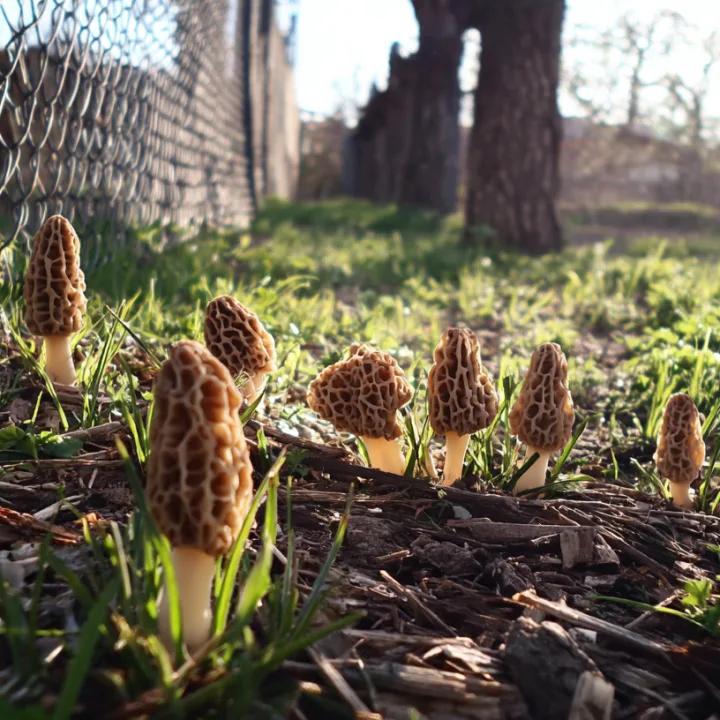
Habitat and species
Edges, open woods, riverine areas or disturbed soils depending on species. Compare aspect, soil depth and canopy continuity. A stony exposed slope can dry quickly, while a valley or higher elevation follows a different moisture pattern.
Read the local terrain
Compare aspect, soil depth and canopy continuity. A stony exposed slope can dry quickly, while a valley or higher elevation follows a different moisture pattern.
Season and microclimate
Mainly spring, shifting later with elevation. In Bellinzona region, elevation, aspect and drought duration can advance, delay or interrupt this window.
Prepare the trip
First combine the habitat of Morchella spp., retained moisture and weather over the preceding weeks. Ticino rules apply: 3 kg per person per day, no collecting from 20:00 to 07:00, and full respect for protected species and temporary closures.
Applicable rules
Ticino rules apply: 3 kg per person per day, no collecting from 20:00 to 07:00, and full respect for protected species and temporary closures.
FAQ
Frequently asked questions
Can you find morels in Bellinzona region?
Potential habitat exists in the region, but a map cannot confirm presence or fruiting on the day of a trip.
Should you follow an exact point on the map?
No. Compare broad areas, respect access and inspect habitat without disturbing the soil.