
The Locarno region rises from low lake shores and warm woodland through steep valleys, chestnut and beech forest into mountain woodland. Aspect and rainfall vary greatly between lake and upper valleys. For chanterelles, combine compatible trees, low nutrient enrichment, drainage and lasting moisture. A wet edge after one shower is not enough.
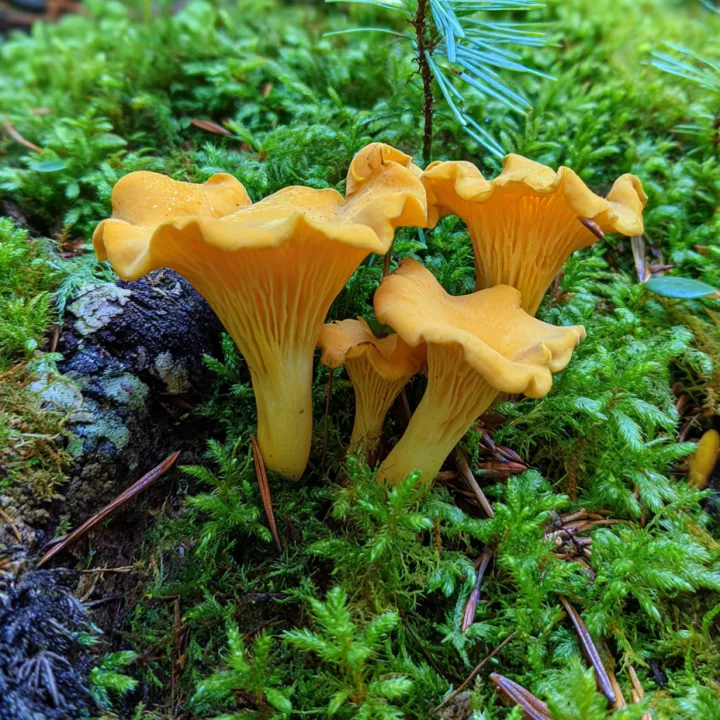
Habitat and species
Woodland soils beneath broadleaf or conifer trees, damp but not waterlogged. Elevation changes both timing and tree composition. Moist areas are not always accessible, and freely draining slopes may dry despite high rainfall totals.
Read the local terrain
Elevation changes both timing and tree composition. Moist areas are not always accessible, and freely draining slopes may dry despite high rainfall totals.
Season and microclimate
Most often from summer into early autumn. In Locarno region, elevation, aspect and drought duration can advance, delay or interrupt this window.
Prepare the trip
First combine the habitat of Cantharellus cibarius, retained moisture and weather over the preceding weeks. Apply Ticino’s 3 kg limit, night-time prohibition and all local protections. In valleys and reserves, also check access and temporary closures.
Applicable rules
Apply Ticino’s 3 kg limit, night-time prohibition and all local protections. In valleys and reserves, also check access and temporary closures.
FAQ
Frequently asked questions
Can you find chanterelles in Locarno region?
Potential habitat exists in the region, but a map cannot confirm presence or fruiting on the day of a trip.
Should you follow an exact point on the map?
No. Compare broad areas, respect access and inspect habitat without disturbing the soil.