
The Lugano region combines warm hills, chestnut and oak woodland, humid valleys and cooler zones towards Capriasca and Val Colla. Tree composition changes quickly with elevation. For porcini, start with woodland composition and soil moisture. Spruce, beech, oak and mixed stands do not share the same seasonal timing.
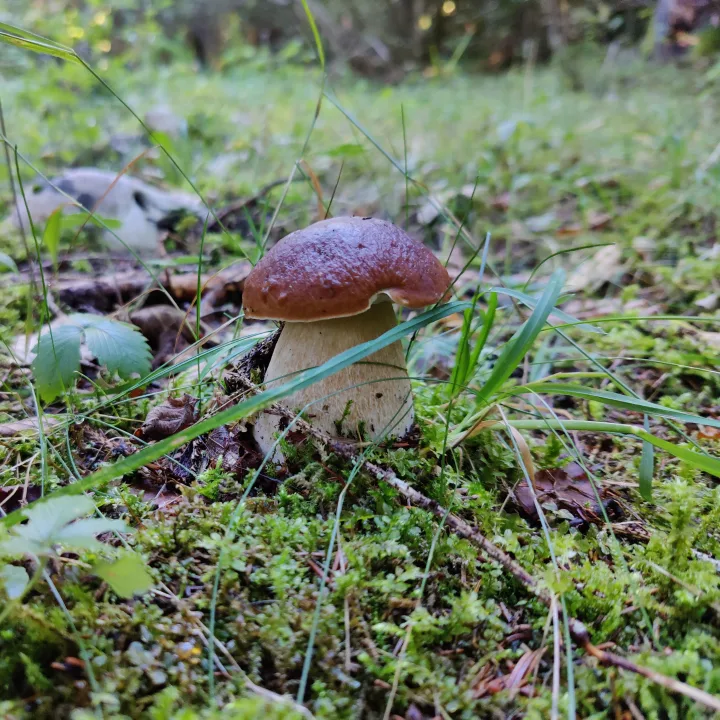
Habitat and species
Broadleaf and conifer forests, often with beech, oak, spruce and fir. Compare warm low-elevation woodland with higher beech and conifer settings. After drought, shaded valleys may retain more moisture.
Read the local terrain
Compare warm low-elevation woodland with higher beech and conifer settings. After drought, shaded valleys may retain more moisture.
Season and microclimate
Summer into autumn, varying widely with elevation and weather. In Lugano region, elevation, aspect and drought duration can advance, delay or interrupt this window.
Prepare the trip
First combine the habitat of Boletus edulis, retained moisture and weather over the preceding weeks. In Ticino, collecting is limited to 3 kg per person per day and prohibited from 20:00 to 07:00. Protected species and temporarily closed zones remain off limits.
Applicable rules
In Ticino, collecting is limited to 3 kg per person per day and prohibited from 20:00 to 07:00. Protected species and temporarily closed zones remain off limits.
FAQ
Frequently asked questions
Can you find porcini and ceps in Lugano region?
Potential habitat exists in the region, but a map cannot confirm presence or fruiting on the day of a trip.
Should you follow an exact point on the map?
No. Compare broad areas, respect access and inspect habitat without disturbing the soil.