
In Geneva, morels are a spring search across open broadleaf woods, edges, riverine habitat and disturbed soils, depending on species. In this dense, fragmented canton, check access, protection and land use first. A potential mushroom spot for morels in Geneva needs several matching clues rather than a familiar woodland name alone.
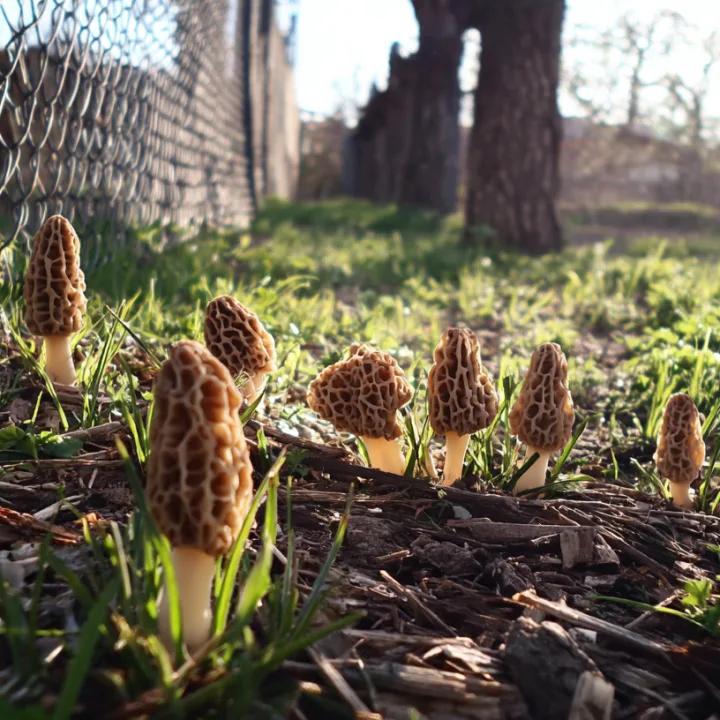
Habitat match
Willow, poplar, ash and other broadleaf trees can shape some settings without forming a recipe. Soil that warms, retains some moisture and shows older disturbance deserves attention.
Read the local terrain
Relief is gentle, but the Rhône, Arve, terraces and fragmented woods create different soils and warming patterns. A recently flooded bank differs from a dry set-back edge.
Choose the timing
Follow spring soil warming rather than a fixed date. A mild phase after moisture is informative when the ground is neither cold, flooded nor already dry.
Search plan
Compare a bright edge with legally accessible riverine woodland, reading soil temperature, moisture and decomposing leaves. Stay within permitted access and do not disturb the soil. Treat every possible morel spot as a field hypothesis, never as a guaranteed location.
Assess a potential morel mushroom spot
In Geneva, a potential mushroom spot combines several matching signals: habitat compatible with Morchella spp., suitable terrain, retained moisture and recent weather. Spot does not mean a secret coordinate or a guaranteed find.
The map helps you search. Never identify.
Cepello helps choose an area. The app does not identify mushrooms and never confirms edibility.
Cantonal foraging rules →FAQ
Frequently asked questions
Do Geneva morels grow only near rivers?
No. Some species use riverine habitat, while others occur at edges, in open woods or disturbed soil. The full context matters.
Does recently disturbed soil guarantee morels?
No. Disturbance is only one clue alongside species, vegetation, moisture and soil warming.