
Evidence does not support one ideal pH for Craterellus cornucopioides. Beech or oak woodland, litter, drainage and local moisture are stronger clues.
What the evidence says about soil
Evidence does not support one ideal pH for Craterellus cornucopioides. Beech or oak woodland, litter, drainage and local moisture are stronger clues.
Fruiting records describe tendencies rather than a simple mechanism, and they include search bias. The factor must be combined with habitat, elevation and preceding weather.
The species ecological context
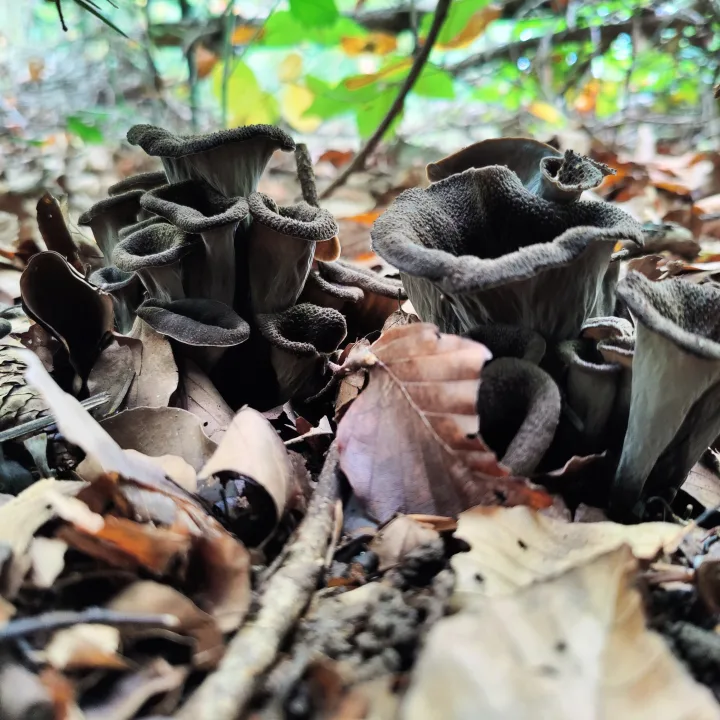
Broadleaf woodland, often with beech or oak, on cool soils rich in humus. Late summer into autumn, with strong local variation.
The visible mushroom is only a temporary fruiting body. Mycelium can be present without fruiting during a visit, and nearby slopes can develop differently.
Soil pH never proves presence
A local correlation does not become a national rule. Cepello ranks potential habitats but detects neither mycelium nor mushrooms in real time.
Combine soil, vegetation and terrain
Before a trip, compare several signals and do not disturb the soil. Respect property, reserves and cantonal rules, and have every collection checked before eating it.
FAQ
Frequently asked questions
Is this factor enough to find the mushroom?
No. It must be combined with habitat, season, moisture, elevation and other local conditions.
Does Cepello guarantee a find?
No. The map compares potentially favourable conditions. It reveals no precise spots, detects no mushrooms and never confirms identification.