
From Bern, accessible landscapes range from Plateau and Aare woodland through rolling country towards the Emmental and Gantrisch. The city is a starting point, not one uniform habitat. For black trumpets, compare cool broadleaf woodland, litter, lower slopes and beech or oak stands. One isolated beech tree confirms no spot.
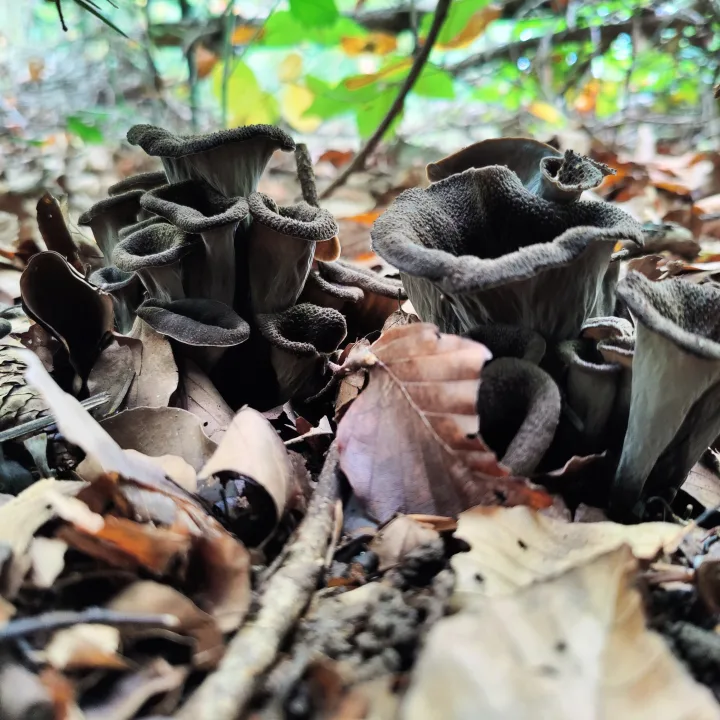
Habitat and species
Broadleaf woodland, often with beech or oak, on cool soils rich in humus. Compare riparian woodland, better-drained plateaus and rising hills. A search near Bern must identify the landscape before interpreting rainfall or season.
Read the local terrain
Compare riparian woodland, better-drained plateaus and rising hills. A search near Bern must identify the landscape before interpreting rainfall or season.
Season and microclimate
Late summer into autumn, with strong local variation. In Bern, elevation, aspect and drought duration can advance, delay or interrupt this window.
Prepare the trip
First combine the habitat of Craterellus cornucopioides, retained moisture and weather over the preceding weeks. The largest cantonal forest massifs lie mainly in the Emmental and Gantrisch. Around the city, check ownership, local protection and Bernese rules before collecting.
Applicable rules
The largest cantonal forest massifs lie mainly in the Emmental and Gantrisch. Around the city, check ownership, local protection and Bernese rules before collecting.
FAQ
Frequently asked questions
Can you find black trumpets and horn of plenty in Bern?
Potential habitat exists in the region, but a map cannot confirm presence or fruiting on the day of a trip.
Should you follow an exact point on the map?
No. Compare broad areas, respect access and inspect habitat without disturbing the soil.