
Northern Vaud combines the Orbe plain, Nozon valleys, Jura foothills and higher mountain woodland. This range creates markedly different moisture patterns and seasonal timing. For black trumpets, compare cool broadleaf woodland, litter, lower slopes and beech or oak stands. One isolated beech tree confirms no spot.
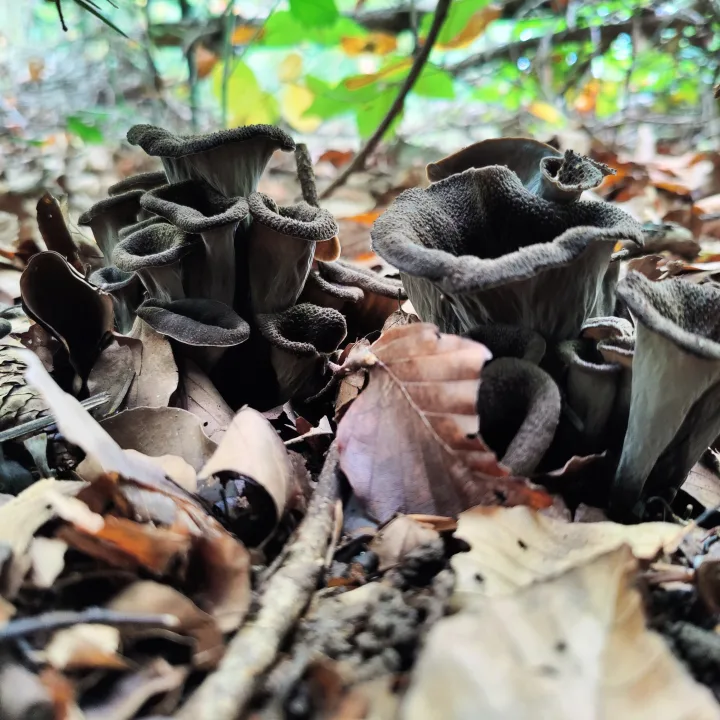
Habitat and species
Broadleaf woodland, often with beech or oak, on cool soils rich in humus. Distinguish well-drained Jura foothill soil, cool valley settings and higher conifer stands. The same rainfall behaves differently on the plain and in mountain woodland.
Read the local terrain
Distinguish well-drained Jura foothill soil, cool valley settings and higher conifer stands. The same rainfall behaves differently on the plain and in mountain woodland.
Season and microclimate
Late summer into autumn, with strong local variation. In Northern Vaud, elevation, aspect and drought duration can advance, delay or interrupt this window.
Prepare the trip
First combine the habitat of Craterellus cornucopioides, retained moisture and weather over the preceding weeks. Valleys, reserves, wooded pasture and private holdings do not share identical access conditions. Use authorised access and check cantonal or municipal restrictions.
Applicable rules
Valleys, reserves, wooded pasture and private holdings do not share identical access conditions. Use authorised access and check cantonal or municipal restrictions.
FAQ
Frequently asked questions
Can you find black trumpets and horn of plenty in Northern Vaud?
Potential habitat exists in the region, but a map cannot confirm presence or fruiting on the day of a trip.
Should you follow an exact point on the map?
No. Compare broad areas, respect access and inspect habitat without disturbing the soil.