
Around Zurich, the Uetliberg, wooded hills, ravines and urban forests create strongly contrasting terrain. Aspect and visitor pressure change quickly from one slope to another. For black trumpets, compare cool broadleaf woodland, litter, lower slopes and beech or oak stands. One isolated beech tree confirms no spot.
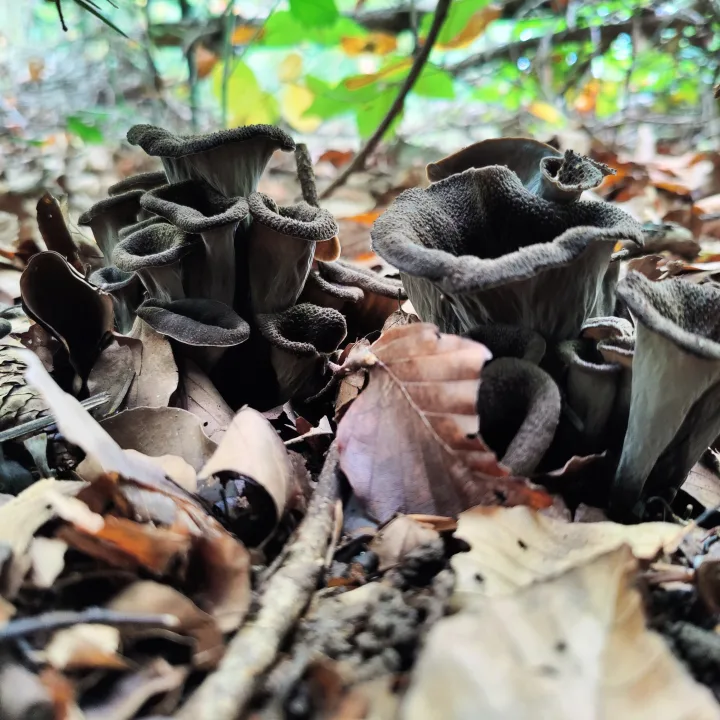
Habitat and species
Broadleaf woodland, often with beech or oak, on cool soils rich in humus. Ravines may retain moisture while dry aspects and clearings respond quickly to sun. Compare soil, canopy and trees rather than distance from the city centre alone.
Read the local terrain
Ravines may retain moisture while dry aspects and clearings respond quickly to sun. Compare soil, canopy and trees rather than distance from the city centre alone.
Season and microclimate
Late summer into autumn, with strong local variation. In Zurich, elevation, aspect and drought duration can advance, delay or interrupt this window.
Prepare the trip
First combine the habitat of Craterellus cornucopioides, retained moisture and weather over the preceding weeks. Several nearby areas are protected and heavily visited. Respect official paths, reserves, other users and Zurich cantonal rules.
Applicable rules
Several nearby areas are protected and heavily visited. Respect official paths, reserves, other users and Zurich cantonal rules.
FAQ
Frequently asked questions
Can you find black trumpets and horn of plenty in Zurich?
Potential habitat exists in the region, but a map cannot confirm presence or fruiting on the day of a trip.
Should you follow an exact point on the map?
No. Compare broad areas, respect access and inspect habitat without disturbing the soil.