
Bern is too varied for one answer. Seek the overlap of mature trees, cool soil and suitable temperature, shifting from the Plateau towards the Emmental or Oberland as the season progresses. A potential mushroom spot for porcini in Bern needs several matching clues rather than a familiar woodland name alone.
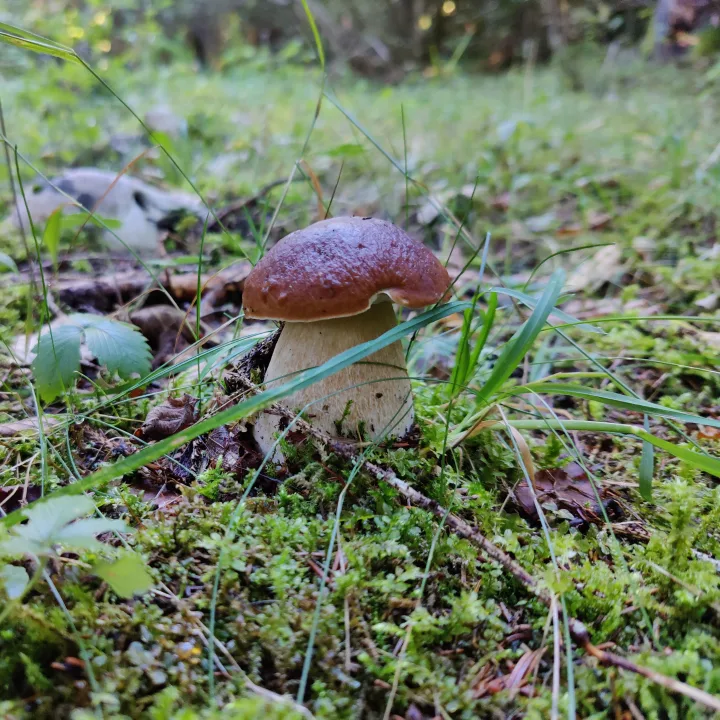
Habitat match
Mid-elevation beech-fir woods and higher spruce stands offer possible partners. Discount compacted soil, saturated hollows and very young woodland.
Read the local terrain
The Plateau, Emmental hills and Alpine valleys receive and retain water differently. At the same elevation, aspect and valley depth can reverse the assessment.
Choose the timing
Lower belts may start earlier after mild weather and then dry out. Higher woods follow only once their soils have warmed.
Search plan
Compare two elevation belts beneath the same trees, then follow a contour to limit variables. Keep the belt where litter, moss and soil temperature agree. Treat every possible porcini spot as a field hypothesis, never as a guaranteed location.
Assess a potential porcini mushroom spot
In Bern, a potential mushroom spot combines several matching signals: habitat compatible with Boletus edulis, suitable terrain, retained moisture and recent weather. Spot does not mean a secret coordinate or a guaranteed find.
The map helps you search. Never identify.
Cepello helps choose an area. The app does not identify mushrooms and never confirms edibility.
Cantonal foraging rules →FAQ
Frequently asked questions
Is the Bernese Oberland always the best choice?
No. It can be too cold or high early in the season. Plateau and Emmental woods may then be further ahead.
Is heavy Plateau rain enough?
No. Check whether the canopy retained moisture and whether the following days dried the soil quickly.