
Valais has no single porcini season. Damp slope forests with spruce, fir, beech or larch are a better match than the hot, dry valley floor, but elevation and aspect can shift the window substantially. A potential mushroom spot for porcini in Valais needs several matching clues rather than a familiar woodland name alone.
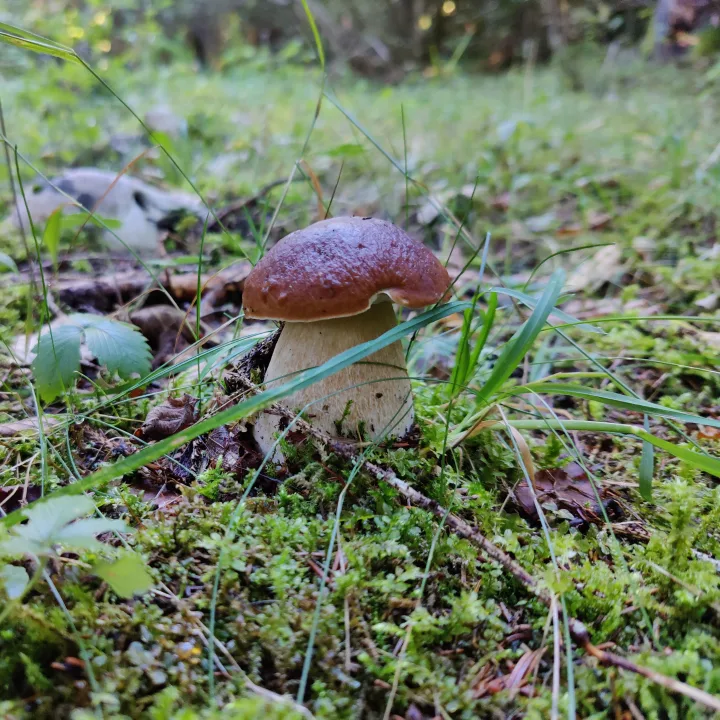
Habitat match
Partner trees occur across several elevation belts, but moisture continuity is the main filter. An attractive conifer stand on a sun-baked slope is less convincing than a sheltered slope with cool soil.
Read the local terrain
Sunny and shaded slopes can have opposite conditions at the same elevation. Side valleys, breaks in slope and forest corridors redistribute rain, shade and wind over short distances.
Choose the timing
After rain, a warm lower slope may dry before the forest soil responds, while high ground remains cold. Seek the band where gained moisture and active temperatures overlap.
Search plan
Compare two aspects within the same valley before comparing two elevations. Check coolness under litter, mature trees and signs of drying before widening the walk. Treat every possible porcini spot as a field hypothesis, never as a guaranteed location.
Assess a potential porcini mushroom spot
In Valais, a potential mushroom spot combines several matching signals: habitat compatible with Boletus edulis, suitable terrain, retained moisture and recent weather. Spot does not mean a secret coordinate or a guaranteed find.
The map helps you search. Never identify.
Cepello helps choose an area. The app does not identify mushrooms and never confirms edibility.
Cantonal foraging rules →FAQ
Frequently asked questions
Is the Valais valley floor suitable for porcini?
It may contain partner trees, but heat and dryness often limit useful moisture. Slope forests usually provide a more coherent habitat pattern.
Should I climb as high as possible?
No. High ground may be too cold or exposed. Seek the belt where temperature, moisture and partner trees overlap.