
In Ticino, compare low chestnut and oak woods with cooler beech forest and then upland conifers. Warm slopes can dry quickly after heavy rain, so check the soil beneath the canopy. A potential mushroom spot for porcini in Ticino needs several matching clues rather than a familiar woodland name alone.
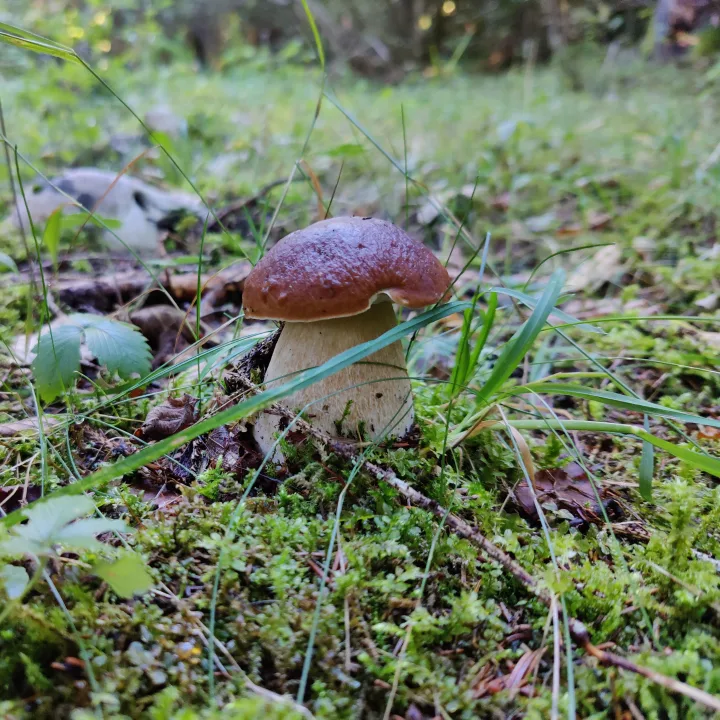
Habitat match
Porcini have partners across several belts, including oak, chestnut, beech and conifers. Mature woodland with cool, drained soil is more convincing than a hot, dry edge.
Read the local terrain
Lakes, enclosed valleys and steep slopes create strong differences by aspect and elevation. Sopraceneri, Sottoceneri and the upper valleys do not share one rhythm.
Choose the timing
After southern Alpine rain, allow excess water to drain and then follow residual coolness. In warm weather, shaded slopes and higher belts hold the window longer.
Search plan
Choose one catchment and compare chestnut, beech and conifer belts in sequence. Stay with the band where soil is cool, unsaturated and sheltered from direct sun. Treat every possible porcini spot as a field hypothesis, never as a guaranteed location.
Assess a potential porcini mushroom spot
In Ticino, a potential mushroom spot combines several matching signals: habitat compatible with Boletus edulis, suitable terrain, retained moisture and recent weather. Spot does not mean a secret coordinate or a guaranteed find.
The map helps you search. Never identify.
Cepello helps choose an area. The app does not identify mushrooms and never confirms edibility.
Cantonal foraging rules →FAQ
Frequently asked questions
Can Ticino chestnut woods host porcini?
Yes, chestnut can be a partner, but woodland age, soil and moisture must also fit.
Does heavy rain in Ticino guarantee fruiting?
No. Intensity, drainage, subsequent heat and earlier moisture determine whether useful soil conditions persist.