
In Graubünden, choose a valley and elevation belt before the canton as a whole. Mature spruce, fir or larch woods may fit, but the dry Engadine and damp southern valleys follow different calendars. A potential mushroom spot for porcini in Graubünden needs several matching clues rather than a familiar woodland name alone.
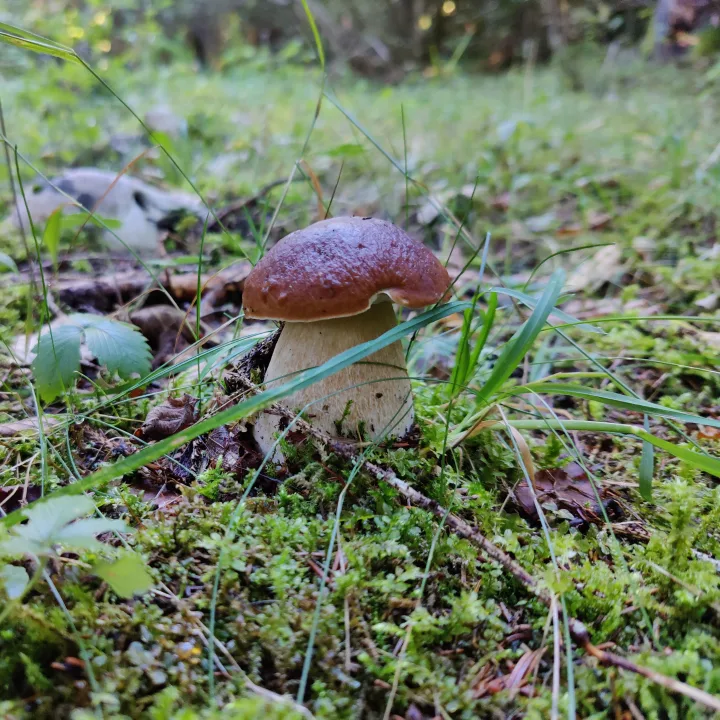
Habitat match
Mature conifers and cool forest humus are the central clues. Dry pine woods, thin exposed soils and windy treelines require much more caution.
Read the local terrain
Large elevation changes shift temperature, rain and snowmelt within a few kilometres. A shaded inner-Alpine slope may remain cold while a southern valley receives more moisture.
Choose the timing
Never transfer a date from one valley to another. First check snow clearance, soil temperature and sustained moisture within the chosen forest belt.
Search plan
Stay in one valley, compare two aspects and then two elevations beneath the same conifers. This separates regional climate from local terrain more clearly. Treat every possible porcini spot as a field hypothesis, never as a guaranteed location.
Assess a potential porcini mushroom spot
In Graubünden, a potential mushroom spot combines several matching signals: habitat compatible with Boletus edulis, suitable terrain, retained moisture and recent weather. Spot does not mean a secret coordinate or a guaranteed find.
The map helps you search. Never identify.
Cepello helps choose an area. The app does not identify mushrooms and never confirms edibility.
Cantonal foraging rules →FAQ
Frequently asked questions
Is the Engadine too dry for porcini?
Not everywhere, but inner-Alpine areas require recent moisture that the soil and canopy have genuinely retained.
Are larches a useful clue?
Yes, they can be partners, but an open dry larch stand differs greatly from mature, cool woodland.