
In the Jura, start with mature beech, fir or spruce and forest soil that has remained springy. The limestone plateaus are cool but free-draining, so sheltered hollows behave differently from ridges. A potential mushroom spot for porcini in Jura needs several matching clues rather than a familiar woodland name alone.
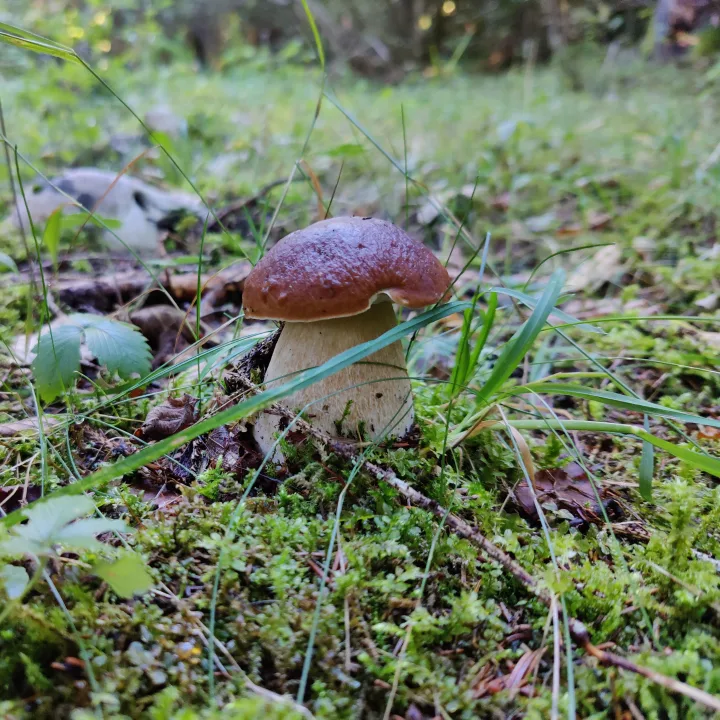
Habitat match
Beech-fir woodland provides suitable porcini partners. In wooded pasture, give more weight to clusters of old trees and continuous forest soil than to open grass.
Read the local terrain
The Franches-Montagnes are exposed to wind, while folds, sinkholes and hollow edges create local moisture reserves. In Ajoie, warmth may advance the season but also shorten damp spells.
Choose the timing
On limestone, assess a sequence of rain rather than the latest shower alone. A mild, sustained damp period may favour lower ground before the colder plateaus.
Search plan
Walk the transition from closed forest to wooded pasture, then compare a hollow and ridge beneath the same trees. Wind and litter condition will show which landform deserves more attention. Treat every possible porcini spot as a field hypothesis, never as a guaranteed location.
Assess a potential porcini mushroom spot
In Jura, a potential mushroom spot combines several matching signals: habitat compatible with Boletus edulis, suitable terrain, retained moisture and recent weather. Spot does not mean a secret coordinate or a guaranteed find.
The map helps you search. Never identify.
Cepello helps choose an area. The app does not identify mushrooms and never confirms edibility.
Cantonal foraging rules →FAQ
Frequently asked questions
Does limestone rule out porcini?
No. Bedrock alone does not exclude the species, although it shapes drainage, soil and vegetation. Read the whole habitat.
Are the Franches-Montagnes too exposed?
Some parts are, but sheltered edges and hollows retain moisture better. Local contrast matters more than the regional label.