
In Zurich, compare low beech and oak woods with cooler mixed forests in the Oberland. After rain, favour soil that remains cool beneath mature trees rather than an area that merely has a damp reputation. A potential mushroom spot for porcini in Zurich needs several matching clues rather than a familiar woodland name alone.
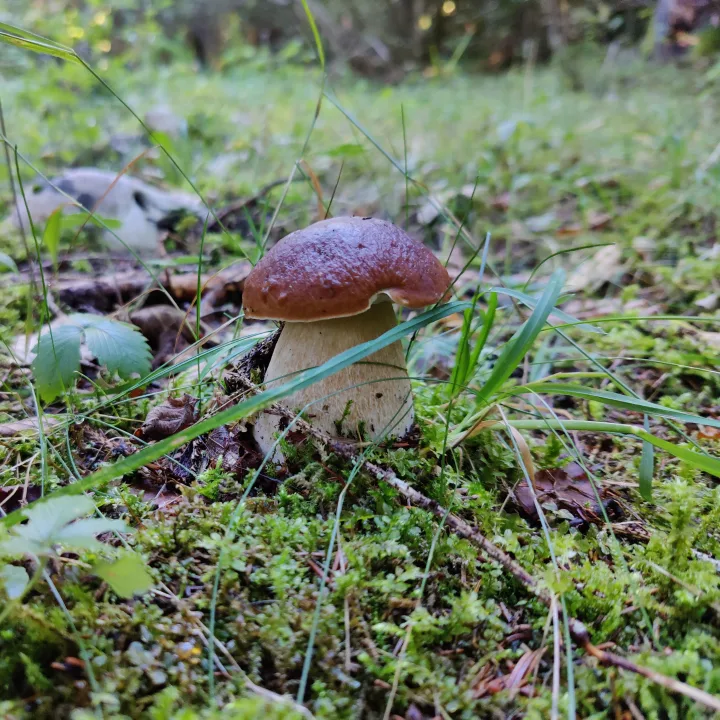
Habitat match
Beech, oak and spruce offer several possible associations. An airy forest floor with springy litter is more relevant than compacted tracks or a dark, dry plantation.
Read the local terrain
The Unterland is lower and warms quickly, while the folded Oberland creates varied shade, runoff and microclimates. Lower slopes help only when they are not waterlogged.
Choose the timing
After warm weather, the shaded Oberland may hold an advantage. At the start of a mild spell, lower woods can respond first if their litter has not dried.
Search plan
Walk across a ridge, mid-slope and bench. Compare the same trees and leave areas quickly where wind, foot traffic and sun have hardened the litter. Treat every possible porcini spot as a field hypothesis, never as a guaranteed location.
Assess a potential porcini mushroom spot
In Zurich, a potential mushroom spot combines several matching signals: habitat compatible with Boletus edulis, suitable terrain, retained moisture and recent weather. Spot does not mean a secret coordinate or a guaranteed find.
The map helps you search. Never identify.
Cepello helps choose an area. The app does not identify mushrooms and never confirms edibility.
Cantonal foraging rules →FAQ
Frequently asked questions
Is the Zurich Oberland always better?
No. It often retains moisture, but can remain cold or too wet. Recent conditions decide.
Can woodland near the city be suitable?
Biologically yes, if trees and soil fit, but visitor pressure, local rules and habitat protection also matter.