
In Vaud, compare mature beech, fir and spruce woodland across the Jura, Jorat and Pre-Alps. Look for litter that has stayed cool after rain, while treating every map signal as an indication rather than a promise of mushrooms. A potential mushroom spot for porcini in Vaud needs several matching clues rather than a familiar woodland name alone.
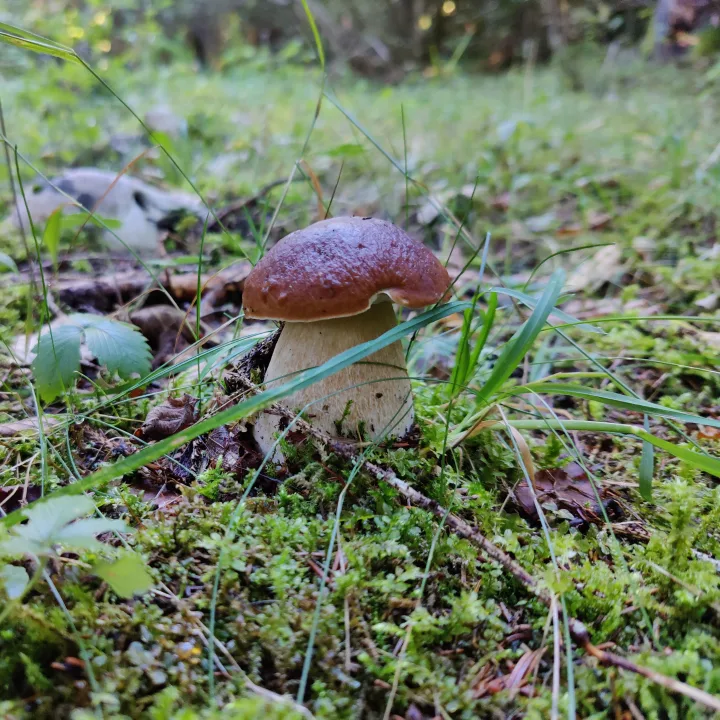
Habitat match
Porcini can associate with lowland beech and oak as well as cooler fir and spruce stands. Mature trees, lightly compacted soil and steady moisture without waterlogging form the strongest habitat match.
Read the local terrain
Free-draining Jura limestone behaves differently from the deeper soils of the Jorat, while pre-Alpine slopes change quickly with elevation and aspect. Compare those three settings instead of treating Vaud as one uniform zone.
Choose the timing
After a wet spell, lower woods may respond before cool high slopes. In warm periods, moisture retained beneath the canopy matters more than the calendar date alone.
Search plan
Choose two broad areas with different relief, check recent rain and temperature, then walk slowly along the contour while reading trees, moss and litter dryness. Move on if the soil is uniformly dry. Treat every possible porcini spot as a field hypothesis, never as a guaranteed location.
Assess a potential porcini mushroom spot
In Vaud, a potential mushroom spot combines several matching signals: habitat compatible with Boletus edulis, suitable terrain, retained moisture and recent weather. Spot does not mean a secret coordinate or a guaranteed find.
The map helps you search. Never identify.
Cepello helps choose an area. The app does not identify mushrooms and never confirms edibility.
Cantonal foraging rules →FAQ
Frequently asked questions
Is the Vaud Jura always best for porcini?
No. Elevation can preserve moisture, but limestone and wind can also dry the soil quickly. The Jorat or Pre-Alps may fit the current weather better.
Should I search only beneath spruce?
No. Porcini can associate with beech, oak and fir as well. Woodland age and soil condition matter as much as the dominant tree.