
In Lucerne, mixed beech, fir and spruce woods form a suitable base, especially where hills hold moisture without pooling it. To the south, elevation preserves coolness but can delay warming. A potential mushroom spot for porcini in Lucerne needs several matching clues rather than a familiar woodland name alone.
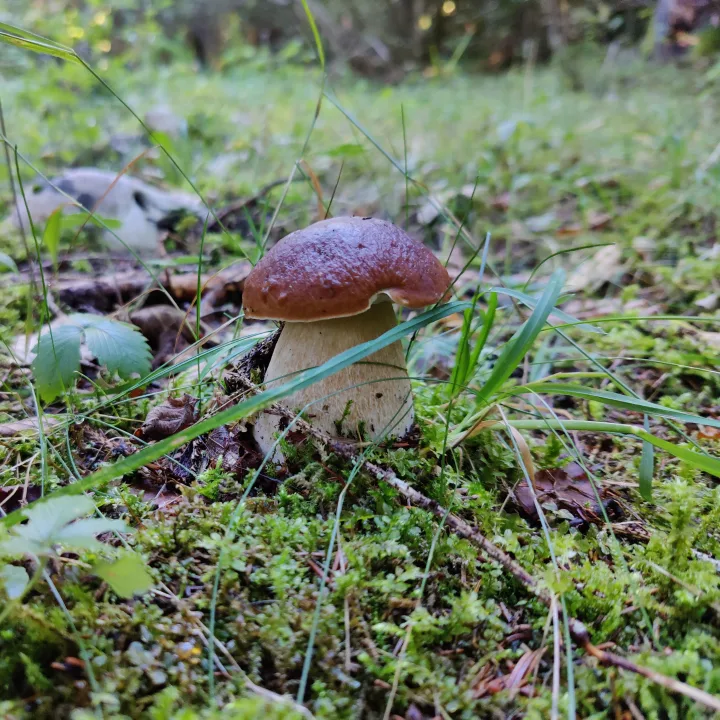
Habitat match
A mature canopy, lightly disturbed roots and cool litter strengthen the match. Waterlogged slope feet and sun-baked edges are less convincing.
Read the local terrain
Hills around the Napf hold rain and mist differently from steeper southern pre-Alpine slopes. A small ridge can dry while the neighbouring gully remains too wet.
Choose the timing
When several damp days follow mild weather, the central hills may respond quickly. After a cool spell, mid-elevation south slopes may resume before higher forest.
Search plan
Compare a gentle slope with stronger pre-Alpine relief beneath similar trees. Base the decision on litter freshness and drainage, not greenery alone. Treat every possible porcini spot as a field hypothesis, never as a guaranteed location.
Assess a potential porcini mushroom spot
In Lucerne, a potential mushroom spot combines several matching signals: habitat compatible with Boletus edulis, suitable terrain, retained moisture and recent weather. Spot does not mean a secret coordinate or a guaranteed find.
The map helps you search. Never identify.
Cepello helps choose an area. The app does not identify mushrooms and never confirms edibility.
Cantonal foraging rules →FAQ
Frequently asked questions
Is very wet ground ideal?
No. Porcini need moisture, but saturated, airless soil is a poor signal.
Is the south of the canton always later?
Often, but aspect and temperature can change the order. A sunny mid-elevation slope can catch up quickly.